Understanding Making Charges in Kerala - Complete Guide to Gold Jewelry Pricing
When buying gold jewelry in Kerala, the final price you pay includes more than just the gold rate. Making charges, also known as labor charges or craftsmanship fees, are a significant component of jewelry pricing. Understanding how making charges work can help you make informed decisions and potentially save money on your gold purchases.
What are Making Charges?
Making charges are the fees charged by jewelers for crafting gold into jewelry. These charges cover:
- Labor costs: The skill and time of the goldsmith
- Design work: Creating molds, patterns, and intricate designs
- Craftsmanship: Handcrafting or machine work involved
- Overhead costs: Workshop expenses, tools, and equipment
Unlike the gold rate (which is based on market prices), making charges are set by individual jewelers and can vary significantly.
How Making Charges are Calculated
Making charges in Kerala are typically calculated in two ways:
1. Percentage-Based (Most Common)
Making charges are calculated as a percentage of the gold value:
- Formula: Making Charges = (Gold Rate × Weight) × Making Charge %
- Example: If gold rate is ₹12,330 per gram (22K), weight is 10 grams, and making charge is 12%
- Gold value: ₹12,330 × 10 = ₹1,23,300
- Making charges: ₹1,23,300 × 12% = ₹14,796
- Total: ₹1,38,096
2. Per Gram Basis (Less Common)
Some jewelers charge a fixed amount per gram:
- Example: ₹500 per gram making charge
- For 10 grams: ₹500 × 10 = ₹5,000
💡 Tip: Use our Making Charges Calculator to quickly calculate the final price of your gold jewelry including making charges.
Typical Making Charges in Kerala
Making charges vary based on several factors:
By Design Complexity
| Design Type | Making Charges Range |
|---|---|
| Simple Designs (chains, bangles) | 8% - 12% |
| Medium Complexity (rings, earrings) | 10% - 15% |
| Intricate Designs (traditional Kerala jewelry) | 12% - 18% |
| Custom/Handcrafted (special orders) | 15% - 25% |
By Jewelry Type
- Chains: 8% - 12% (simpler designs)
- Bangles: 10% - 14% (moderate complexity)
- Rings: 12% - 16% (varies with design)
- Earrings: 10% - 15% (depends on size and design)
- Necklaces: 12% - 18% (especially traditional Kerala designs)
- Bracelets: 10% - 14%
- Pendants: 15% - 20% (if intricate)
Traditional Kerala Jewelry
Kerala’s traditional jewelry designs often have higher making charges due to:
- Intricate craftsmanship: Detailed handwork required
- Traditional techniques: Time-consuming traditional methods
- Design complexity: Elaborate patterns and motifs
- Cultural significance: Premium for authentic traditional designs
Popular Kerala jewelry with higher making charges:
- Kasu Mala (coin necklace)
- Palakka Mala (leaf necklace)
- Nagapadam (snake design)
- Temple jewelry
- Antique designs
Factors Affecting Making Charges
1. Design Complexity
- Simple, machine-made designs: Lower charges (8-10%)
- Handcrafted intricate designs: Higher charges (15-25%)
- Custom designs: Premium charges (20-30%)
2. Gold Purity
- 22K Gold: Standard making charges (most common in Kerala)
- 18K Gold: Slightly higher charges (more alloy work)
- 24K Gold: Lower or no charges (for coins/bars, not jewelry)
3. Jewelry Weight
- Lightweight pieces: Higher percentage charges (more work per gram)
- Heavy pieces: Lower percentage charges (economies of scale)
- Large orders: Negotiable discounts possible
4. Jeweler Reputation
- Established jewelers: Premium charges for brand value
- Local jewelers: Competitive rates
- Workshop jewelers: Lower charges (direct from manufacturer)
5. Location
- Metro cities (Kochi, Trivandrum): Higher charges
- Tier-2 cities: Moderate charges
- Small towns: Lower charges
How to Calculate Final Price
The complete price breakdown for gold jewelry includes:
- Gold Price = Gold Rate per gram × Weight in grams
- Making Charges = Gold Price × Making Charge % (or fixed per gram)
- GST = 3% on (Gold Price + Making Charges)
- Final Price = Gold Price + Making Charges + GST
Example Calculation
Scenario: Buying a 22K gold chain weighing 20 grams
- Current 22K gold rate: ₹12,330 per gram
- Making charges: 12%
- GST: 3%
Calculation:
- Gold price: ₹12,330 × 20 = ₹2,46,600
- Making charges: ₹2,46,600 × 12% = ₹29,592
- Subtotal: ₹2,76,192
- GST (3%): ₹2,76,192 × 3% = ₹8,285.76
- Final Price: ₹2,84,477.76
💡 Use our Making Charges Calculator to calculate prices instantly for any weight and making charge percentage.
Tips to Save on Making Charges
1. Compare Multiple Jewelers
- Get quotes from 3-5 jewelers
- Compare both gold rates and making charges
- Don’t just focus on gold rate; total cost matters
2. Negotiate Making Charges
- Making charges are negotiable, especially for:
- Large purchases (above ₹1 lakh)
- Multiple pieces
- Repeat customers
- Ask for discounts on making charges
3. Choose Simpler Designs
- Simple designs have lower making charges
- Intricate traditional designs cost more
- Balance between design preference and budget
4. Buy During Off-Season
- Avoid festival seasons (Onam, Vishu, wedding season)
- Jewelers may offer better rates during low-demand periods
- Plan purchases 2-3 months before needed
5. Consider Workshop Jewelers
- Direct from manufacturer (no retailer markup)
- Lower making charges
- Ensure proper certification and hallmark
6. Bulk Purchases
- Buying multiple pieces together
- Negotiate package deals
- Better bargaining power
7. Exchange Old Gold
- Many jewelers offer lower making charges when exchanging old jewelry
- Check exchange rates and policies
- Calculate if exchange is beneficial
Common Questions About Making Charges
Are Making Charges Negotiable?
Yes! Making charges are not fixed and can be negotiated, especially for:
- Large purchases
- Multiple pieces
- Regular customers
- Off-season purchases
Do Making Charges Affect Resale Value?
No. When you sell gold jewelry:
- You get paid only for the gold value (current rate × weight × purity)
- Making charges are not recovered
- Only the gold content has resale value
Should I Buy Jewelry or Gold Coins/Bars?
For Investment: Gold coins/bars (24K) are better
- No making charges
- Pure gold value
- Easy to sell
- Better for investment
For Use: Jewelry is better
- Can be worn and enjoyed
- Cultural and emotional value
- But making charges reduce investment value
What’s a Fair Making Charge Percentage?
- 8-12%: Good rate for simple designs
- 12-15%: Standard for medium complexity
- 15-20%: Acceptable for intricate designs
- Above 20%: High, negotiate or compare
Can I Avoid Making Charges?
- Gold coins/bars: No making charges
- Exchange old jewelry: Lower or waived charges
- Buy from wholesalers: Lower charges
- Simple designs: Minimal charges
Making Charges vs. Gold Rate
It’s important to understand that:
- Gold rate is market-determined and same across jewelers (with minor variations)
- Making charges are jeweler-determined and vary significantly
- Total cost = Gold rate + Making charges + GST
Example: Two jewelers with same gold rate
- Jeweler A: Gold rate ₹12,330, Making charge 10% = ₹1,233 per gram
- Jeweler B: Gold rate ₹12,330, Making charge 15% = ₹1,849.50 per gram
- Difference: ₹616.50 per gram (5% difference)
For 20 grams, the difference is ₹12,330 - a significant amount!
Kerala-Specific Considerations
Traditional Jewelry Premium
Kerala’s traditional jewelry designs often command premium making charges due to:
- Handcrafted techniques passed through generations
- Intricate designs specific to Kerala culture
- Time-intensive traditional methods
- Cultural and sentimental value
Festival Season Impact
During festivals (Onam, Vishu, wedding season):
- Higher demand increases making charges
- Limited availability of skilled craftsmen
- Premium pricing for rush orders
- Tip: Order 2-3 months in advance for better rates
District Variations
Making charges may vary slightly across Kerala districts:
- Metro areas (Kochi, Trivandrum): Higher charges
- Commercial hubs: Competitive rates
- Smaller towns: Lower charges but verify quality
Using the Making Charges Calculator
Our Making Charges Calculator helps you:
- Calculate final jewelry price instantly
- Compare different making charge percentages
- Use today’s gold rates or custom rates
- Convert between grams and Pavan
- See detailed price breakdown
How to use:
- Select gold rate (use today’s rate or enter custom)
- Choose gold purity (18K, 22K, or 24K)
- Enter weight in grams or Pavan
- Enter making charge percentage
- Get instant price breakdown
Final Tips for Kerala Gold Buyers
- Always calculate total cost, not just gold rate
- Compare making charges across jewelers
- Negotiate making charges, especially for large purchases
- Check hallmark certification for purity
- Understand the design - intricate designs cost more
- Plan ahead - avoid rush orders during festivals
- Use our calculator to estimate costs before visiting jewelers
- Keep receipts and documentation for future reference
Conclusion
Making charges are an essential part of gold jewelry pricing in Kerala. Understanding how they work, typical rates, and negotiation strategies can help you make better purchasing decisions. Remember:
- Making charges vary by design, jeweler, and location
- They are negotiable, especially for large purchases
- Total cost (gold + making charges + GST) matters more than just gold rate
- Use tools like our Making Charges Calculator to estimate costs
Whether you’re buying traditional Kerala jewelry or modern designs, being informed about making charges helps you get the best value for your money. Always buy from certified jewelers with proper hallmark certification and transparent pricing.
Related Tools:
- Making Charges Calculator - Calculate final gold jewelry price
- Gram to Pavan Converter - Convert gold weight measurements
1 GM 24K (999.9+) Pure Gold Coin - Rose Design
This 1 gram 24K (999.9+) pure gold coin features an elegant rose motif and is minted by a certified refinery. Ideal for gifting, small investments, or conversion into jewellery, it comes with assured purity and buyback support as per seller terms.
- ✔ Individually numbered CertiCard
- ✔ Assured buyback at live market price
- ✔ BIS & LBMA certified purity
- ✔ Ideal for gifting & small investments
As an Amazon Associate, we may earn a commission from qualifying purchases without any additional cost to you.
Related Articles

Will US–Iran War Push Gold Prices Higher in Kerala?
Geopolitical tensions in the Middle East are once again making global headlines, with rising …
Read more →
Digital Gold in India: Is It a Smart Way to Invest in Gold Today?
In our previous post, we explored the various ways to invest in gold—from jewellery and coins to …
Read more →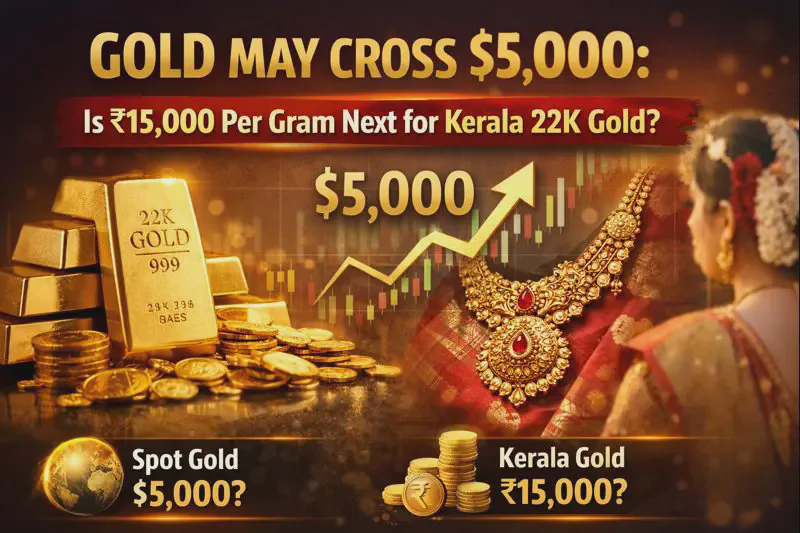
Gold May Cross $5,000: Is ₹15,000 per Gram Next for Kerala 22K Gold?
Gold prices are once again in the spotlight. Global markets are increasingly discussing the …
Read more →